
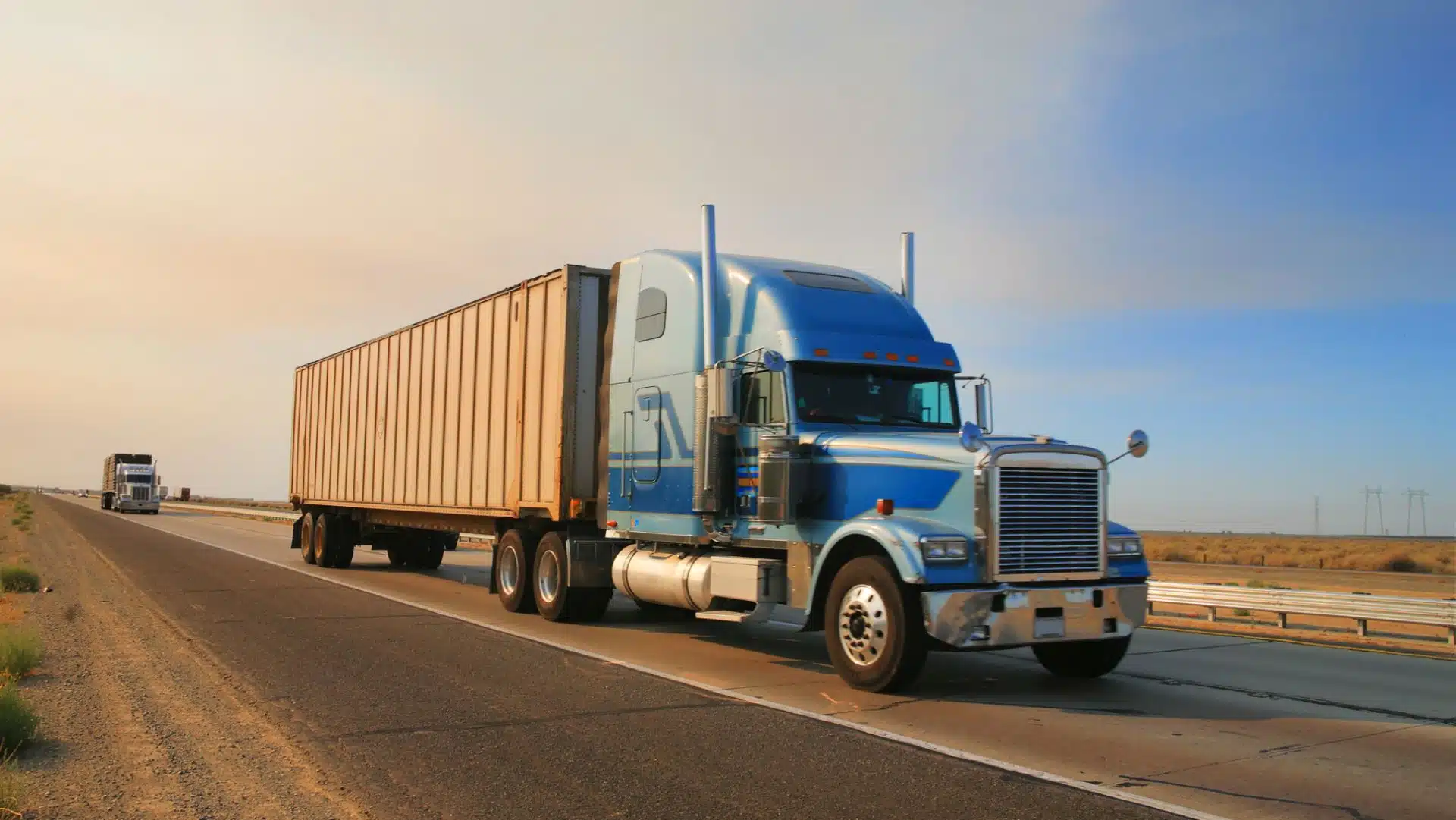
Why Tractor-Trailer Accidents Are More Dangerous Than Passenger Vehicle Crashes







Seeking Punitive Damages for a Wrongful Death
Why tractor-trailer crashes are more severe.
Why Tractor-Trailer Accidents Are Legally More Complex

Tractor-trailer accidents cause more severe injuries than most car crashes. These crashes involve much larger vehicles, greater force, and more complex legal questions. If you or someone you love was hurt by a commercial truck, understanding why these crashes are so dangerous can help you know your rights and your options.
Why Tractor-Trailer Accidents Cause More Severe Injuries
Tractor-trailers can weigh up to 80,000 pounds when fully loaded. A typical passenger car weighs between 3,000 and 4,000 pounds. That size difference is one of the main reasons these crashes cause such serious harm.
When a large truck hits a smaller car, the smaller vehicle absorbs most of the impact. Passengers inside have far less protection as a result. Even at moderate speeds, the damage can be severe.
The Physics of a Crash
More weight and more speed mean more force in a crash. A fully loaded truck moving at highway speed carries a large amount of energy.
That energy has to go somewhere during a collision, and much of it goes directly into the smaller vehicle.
Passenger cars are built to handle impacts from other cars. However, this does not apply to trucks many times their size. That mismatch leads to severe structural damage in crashes involving large trucks.
Stopping Distance and Speed
Large trucks need far more room to stop than passenger cars do. At highway speeds, a loaded truck may need hundreds of feet to come to a full stop. A car can typically stop in much less distance.
This gap matters every time traffic slows or a hazard appears on the road. If a truck driver can’t stop in time, a near-miss can quickly become a serious crash.
Crash Types Unique to Large Trucks
Some types of accidents occur only with large trucks and tend to cause serious injuries.
Underride accidents happen when a smaller vehicle slides under a trailer. These crashes often lead to severe or fatal injuries.
Jackknife accidents occur when the trailer swings out to the side, sweeping across multiple lanes. Rollovers can happen when a truck’s weight shifts suddenly, especially in sharp turns or when cargo is loaded incorrectly.
These crash types are specific to large commercial vehicles and contribute directly to the higher injury rates seen in truck accidents.
Common Injury Types in Truck Crashes
Truck crashes tend to produce more severe injuries than car crashes. These include:
- Traumatic brain injury (TBI) caused by violent head movement or direct impact
- Spinal cord damage can result in partial or full paralysis
- Internal organ injuries are often caused by crushing force or seatbelt pressure under extreme impact
- Crush injuries to limbs may require amputation
- Wrongful death truck crashes have a much higher fatality rate than standard car crashes
If you or someone you love suffered a serious injury in a truck crash, a Vermont truck accident lawyer can help you understand your options.
Contact UsHow Federal Rules Make Truck Accident Cases More Complex

Truck accidents are governed by federal regulations that don’t apply to regular passenger vehicles. These rules come from the Federal Motor Carrier Safety Administration. They set safety standards for trucking companies and their drivers.
Personal injury claims are still handled under state law. But violations of federal rules can be used as evidence when determining who was at fault.
Hours of Service Rules
Federal rules limit how many hours a truck driver can work before taking a required rest break. These limits exist to prevent crashes caused by driver fatigue.
When drivers exceed those limits, their reaction time and judgment can suffer. If a driver broke these rules before a crash, that violation may be an important factor in your case.
Weight and Load Limits
Federal and state laws cap how much weight a truck can carry. Overloaded trucks are harder to control and need more distance to stop. Cargo that isn’t properly secured can shift while the truck is moving, increasing the risk of rollovers or loss of control.
Responsibility for weight violations can fall on the trucking company, the shipper, or the loading crew. Figuring out who handled the cargo is often a key part of building a liability case.
Equipment Maintenance Standards
Trucking companies must inspect and maintain their vehicles under federal safety rules. Brake failures, tire blowouts, and steering defects can all contribute to serious crashes.
Maintenance records often matter in truck accident cases. They can show whether required inspections were done or whether known problems were left unaddressed.
Contact UsWhy Liability Is More Complicated in Tractor-Trailer Accidents
Tractor-trailer accidents often involve more than one responsible party. In addition to the driver, liability may extend to the trucking company, cargo loaders, maintenance providers, or manufacturers of defective parts.
Each party may carry different legal responsibilities. A trucking company may be responsible for hiring and supervising drivers.
A maintenance provider may be responsible for vehicle safety. In many cases, companies can also be held responsible for a driver’s actions under employer liability principles.
In Vermont and New Hampshire, fault can be shared between parties. Your ability to recover damages may depend on your percentage of fault under each state’s comparative fault rules.
What to Do After a Tractor-Trailer Crash
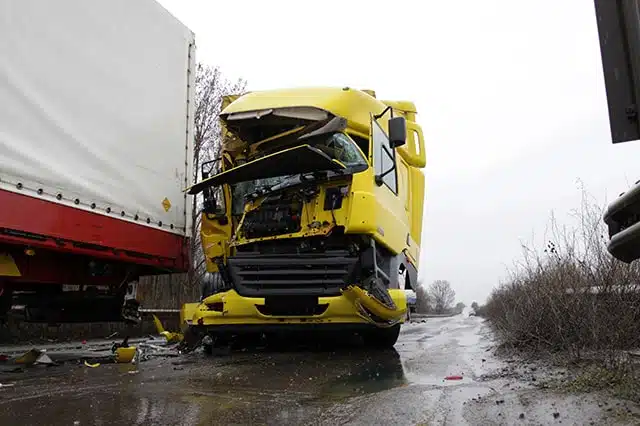
Knowing what to do after a crash can protect both your health and your legal rights. Truck accident cases involve evidence that disappears fast. Acting quickly matters.
Steps to Take at the Scene
If you are physically able, take these steps right away:
- Call 911 and get medical help for anyone who is hurt
- Do not move your vehicle unless it is a safety hazard
- Take photos of all vehicles, skid marks, road conditions, and any visible cargo
- Get the truck driver’s name, license, and the trucking company name
- Speak to witnesses and collect their contact information
- Do not give a recorded statement to any insurance company at the scene
These steps not only support your immediate safety but also help preserve information that may later be important in a legal claim.
Evidence That Disappears Quickly
Truck accident cases depend on time-sensitive evidence. Some of it can be gone within days.
- Electronic logging device (ELD) data records how long the driver was on the road
- Black box data captures speed, braking, and other actions before the crash
- Dashcam footage may show what the driver was doing just before the impact
- Driver phone records can reveal distracted driving
- Truck inspection logs show whether the vehicle was properly maintained
This evidence helps establish how the crash occurred and whether any safety rules were violated. Once this information is lost, it may no longer be available. An attorney can take steps to preserve this evidence early in the process.
When to Speak With a Lawyer
You should consider speaking with a lawyer as soon as possible after a truck accident. These cases have strict legal deadlines, and missing them can limit or block your ability to recover compensation.
In Vermont, the statute of limitations for most personal injury claims is three years from the date of the accident under 12 V.S.A. § 512. The same deadline applies to wrongful death claims. If a claim isn’t filed in time, the court may dismiss it regardless of its merits.
In New Hampshire, the statute of limitations for personal injury and wrongful death claims is also three years from the date of injury or death under N.H. Rev. Stat. § 508:4. Missing this deadline can prevent a claim from moving forward.
Three years may feel like plenty of time, but truck accident cases often need early investigation. Electronic logging data, maintenance records, and witness statements become harder to obtain over time.
These cases often involve multiple parties, including the driver, the trucking company, and others connected to the vehicle’s operation. Getting legal guidance early helps identify responsible parties, secure evidence, and make sure all deadlines are met.
Talk to an Attorney About Your Options

Tractor-trailer crashes often cause serious harm. The legal questions that follow can feel just as heavy as the injuries.
If you or someone you love was hurt in a truck accident in Vermont or New Hampshire, speaking with an attorney may help you understand your rights and what steps may be available to you.
Sabbeth Law focuses on truck accident cases across Vermont and New Hampshire. A conversation costs nothing. It may give you a clearer picture of where things stand.
You don’t have to figure this out alone. Reach out through the Sabbeth Law contact page to ask questions and get guidance at your own pace.
Frequently Asked Questions
Why does a tractor-trailer take so much longer to stop than a car?
A tractor-trailer takes longer to stop because it weighs much more than a passenger car. A fully loaded truck can weigh up to 80,000 pounds. This makes tractor-trailers require more distance and force to slow down. At highway speeds, a truck may need a distance comparable to two football fields to stop, while a car can stop much sooner.
What makes tractor-trailer accidents more likely to cause fatal injuries?
Tractor-trailer accidents often cause more severe injuries because of the size and weight of the truck. When a large truck collides with a smaller vehicle, the smaller vehicle absorbs most of the impact. This can lead to serious injuries such as head trauma, spinal damage, or fatal injuries.
Are truck drivers held to different safety rules than regular drivers in Vermont and New Hampshire?
Yes. Truck drivers must follow federal safety regulations set by the FMCSA. These rules limit driving hours, require rest breaks, and regulate how cargo is loaded and secured. Passenger vehicle drivers are not subject to these same requirements.
Why do tractor-trailer accidents often involve more than one liable party?
Tractor-trailer accidents often involve multiple parties because different entities are responsible for different parts of the truck’s operation. In addition to the driver, liability may include the trucking company, cargo loaders, maintenance providers, or equipment manufacturers. Each may contribute to how the accident occurred.
How does cargo shift cause truck accidents, and who is responsible?
Cargo shift can cause accidents when improperly secured loads move during transit. This can change the truck’s balance and make it harder to control, especially when turning or braking. Responsibility may depend on who loaded and secured the cargo, as well as the trucking company and driver.
Contact Us
Client Testimonials
“Immediately after my son’s injury at work, he was treated poorly. Over the course of the next few days it became even worse, so I called Mike and he and Crystal have been absolute lifesavers during the process. Mike is not your typical stuffed suit lawyer who only cares about the bottom line he genuinely cares about his clients and his assistant Crystal is beyond amazing! My thanks to you both!”
LUKE PARMENTER
“I could never ask for a better attorney, to fight for me, to believe in me, and have faith in me, than what I found in Mike Sabbeth, He doesn’t treat you like a client, he treats you as if you are one of his own family members, He will fight for you, with all he has, and is ALWAYS up front and honest with you about everything!”
SANDRA DRUGE