

Commercial Truck Types: Understanding Their Functions and Variations







Different Commercial Truck Types: Safety, Efficiency, and Legal Cases
Commercial trucks are vehicles designed to transport goods, materials, equipment, and other cargo for business purposes. They come in many forms, ranging from box trucks used for local deliveries to tractor-trailers that move freight across the country. Each type of commercial truck is designed for a specific purpose and plays an important role in supply chains, construction projects, public services, and other industries.
Understanding the different types of commercial trucks is important because the design, size, and function of a vehicle can affect safety, efficiency, operating requirements, and regulatory compliance. The type of truck used may influence cargo capacity, maneuverability, stopping distance, maintenance needs, and overall transportation costs.
Commercial truck classifications can also become important in accident investigations and legal claims. Different vehicles are subject to different regulations, operational standards, and safety considerations. As a result, understanding how commercial trucks are used and regulated can provide valuable context when evaluating liability, compliance issues, and roadway safety concerns.
The Significance of Commercial Truck Types in Truck Accident Cases
The type of commercial truck involved in a collision can play an important role in understanding how an accident occurred and who may be responsible. Different vehicles have different operating characteristics, including weight, braking distance, visibility, cargo requirements, and maneuverability. These factors can influence both the cause of a crash and the severity of the resulting injuries.
For example, tractor-trailers require significantly more distance to stop than passenger vehicles, while tanker trucks may face a higher risk of rollover accidents due to the movement of liquid cargo. Box trucks, dump trucks, and flatbed trucks each present their own operational challenges that may affect accident dynamics.
Commercial truck type can also influence the scope of an accident investigation. Investigators may examine factors such as cargo securement, vehicle maintenance, hours-of-service compliance, loading practices, equipment specifications, and applicable federal or state regulations. Certain truck configurations may also require specialized analysis to determine whether mechanical failures, operational errors, or regulatory violations contributed to the crash.
Contact UsCommon Types of Commercial Trucks
Commercial trucks perform a wide range of functions across industries such as transportation, construction, manufacturing, agriculture, and retail. Each type is designed for a specific purpose, and its size, weight, cargo, and operating characteristics can influence both safety and accident risk.
Semi-Trucks / Tractor-Trailers
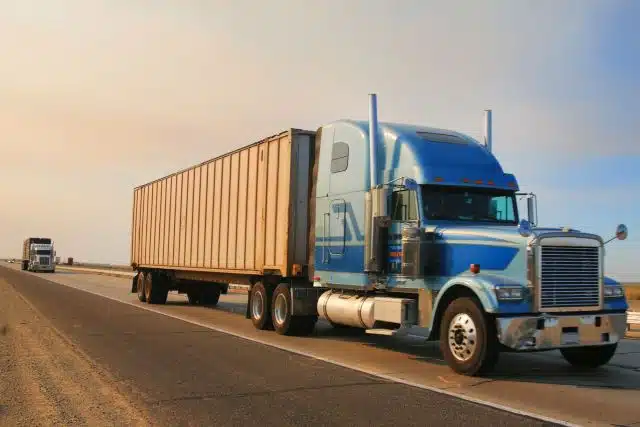
Semi-trucks, also known as tractor-trailers, 18-wheelers, or big rigs, are among the most recognizable commercial vehicles on the road. They are primarily used to transport freight over long distances and can weigh up to 80,000 pounds when fully loaded. Due to their size, stopping distance, and large blind spots, collisions involving semi-trucks often result in severe damage and serious injuries.
Tanker Trucks
Tanker trucks are designed to transport liquids and gases, including fuel, chemicals, water, and food-grade products. The movement of liquid cargo inside the tank can affect vehicle stability, particularly during sudden braking or sharp turns. This increased risk of rollover makes tanker trucks unique among commercial vehicles.
Flatbed Trucks
Flatbed trucks feature an open trailer without sides or a roof, making them well-suited for transporting oversized cargo such as construction materials, heavy equipment, and machinery. Because cargo is exposed, proper loading and securement are critical. Improperly secured loads can shift during transit or fall onto the roadway, creating significant hazards.
Dump Trucks
Dump trucks are commonly used in construction, roadwork, and mining operations to transport loose materials such as gravel, sand, soil, and demolition debris. Their large size, limited visibility, and frequent operation in busy work zones can create additional safety challenges for surrounding motorists.
Box Trucks
Box trucks consist of an enclosed cargo compartment mounted directly behind the cab. They are frequently used for local deliveries, moving services, and retail distribution. Although smaller than tractor-trailers, box trucks can still present risks due to limited visibility, frequent stops, and operation in congested urban areas.
Refrigerated Trucks (Reefers)
Refrigerated trucks, often called reefers, transport temperature-sensitive goods such as food, pharmaceuticals, and agricultural products. These vehicles often travel long distances and require specialized equipment to maintain cargo temperatures throughout transit.

How Various Truck Types Impact Accident Dynamics
The type of commercial truck involved in a collision can significantly influence how an accident occurs, the severity of injuries, and the complexity of an investigation. Commercial vehicles vary considerably in size, weight, cargo, and design, and each of these factors can affect accident dynamics.
- Size and Weight: A truck’s gross vehicle weight rating (GVWR) is often one of the most significant factors in a crash. Heavier vehicles generally require longer stopping distances and generate greater force during impact. As truck size and weight increase, so does the potential for severe property damage and catastrophic injuries.
- Cargo-Related Risks: The type of cargo being transported can create unique safety concerns. Liquid cargo in tanker trucks may shift unexpectedly, affecting vehicle stability. Construction materials transported on flatbeds must be properly secured to prevent cargo loss. Hazardous materials can create additional dangers following a collision, including fires, explosions, or environmental contamination.
- Vehicle Design and Operation: Different truck configurations create different operating challenges. Semi-trucks require wide turns and have extensive blind spots, while dump trucks frequently enter and exit active construction zones. Delivery trucks and box trucks often make repeated stops in areas shared with pedestrians, cyclists, and passenger vehicles. Understanding these operational differences is often important when evaluating how and why a crash occurred.
Legal Implications of Truck Accidents Involving Different Truck Types
Commercial truck accidents often involve complex liability questions. The type of truck, the cargo being transported, and applicable safety regulations can all affect who may be responsible for a crash.
Liability in Semi-Truck Accidents
Semi-truck accidents may involve multiple liable parties, including the driver, trucking company, cargo loaders, maintenance providers, vehicle manufacturers, or other third parties.
Investigations often focus on driver conduct, hours-of-service compliance, maintenance records, and company safety practices. Because semi-trucks operate under extensive federal and state regulations, liability determinations can be more complex than in passenger vehicle accidents.
Hazmat Truck Accidents
Hazmat trucks transport fuel, chemicals, industrial gases, and other potentially dangerous materials.
Federal regulations govern driver qualifications, cargo handling, labeling, routing, and emergency response procedures. Investigations may examine whether regulatory violations contributed to the accident. Some incidents may also involve environmental cleanup requirements and additional regulatory oversight.
Load Securement Violations
Improperly secured cargo can contribute to rollovers, loss-of-control crashes, and multi-vehicle collisions.
Federal cargo securement regulations establish standards for weight distribution, tie-down systems, cargo restraints, and load inspections. Investigators often review loading procedures, inspection records, and cargo documentation to determine whether securement failures contributed to the crash.
Regulatory Compliance and Truck Accident Investigations
Commercial trucking operations are subject to federal and state safety regulations governing hours of service, vehicle inspections, maintenance, driver qualifications, cargo securement, and operating authority.
Evidence may include driver logs, Electronic Logging Device (ELD) data, maintenance reports, inspection records, and Department of Transportation (DOT) documentation. These records can help determine how a crash occurred and whether regulatory violations played a role.

Why Legal Guidance May Be Important After a Commercial Truck Accident
Truck accident cases are often more complex than standard motor vehicle accidents. The type of commercial truck involved can affect the investigation, the evidence available, and the regulations that apply.
Factors that may make a commercial truck accident more complicated include:
- Different safety regulations governing specific truck types and cargo
- Electronic Logging Device (ELD) data and hours-of-service compliance records
- Black box data showing speed, braking activity, and vehicle operation
- Vehicle inspection, maintenance, and repair records
- Cargo securement requirements and loading procedures
- Hazardous materials regulations for tanker and hazmat trucks
- Multiple potentially liable parties, including drivers, trucking companies, cargo loaders, maintenance providers, and manufacturers
- Federal Motor Carrier Safety Regulations (FMCSRs) that may affect liability and compliance issues
Because some evidence can be lost, overwritten, or become more difficult to obtain over time, early investigation is often important. Understanding the type of truck involved, the applicable regulations, and the available evidence can help clarify how a crash occurred and whether safety violations contributed to the accident.
If you have questions about a truck accident or the investigation process, obtaining legal guidance may help you better understand your rights, the evidence involved, and the options available based on the specific circumstances of the case.
Contact UsFrequently Asked Questions
What makes a truck a commercial vehicle?
A commercial truck is generally a vehicle used to transport goods, materials, equipment, or passengers for business purposes. Commercial vehicles range from small delivery trucks and box trucks to large tractor-trailers used in interstate freight transportation.
How are commercial trucks classified?
Commercial trucks are typically classified according to their Gross Vehicle Weight Rating (GVWR). In the United States, trucks are grouped into Classes 1 through 8, with higher classes representing heavier vehicles. Semi-trucks and tractor-trailers are generally classified as Class 8 vehicles.
Why does the type of truck matter in an accident investigation?
Different truck types have different operating characteristics, cargo requirements, and safety regulations. Investigators may examine factors such as cargo securement, vehicle maintenance, hours-of-service compliance, and equipment specifications when determining how a crash occurred.
What is the difference between a semi-truck and a box truck?
A semi-truck consists of a tractor that pulls a separate trailer and is commonly used for long-haul freight transportation. A box truck has an enclosed cargo area attached directly to the vehicle and is typically used for local deliveries, moving services, and retail distribution.
Can the cargo being transported affect accident risk?
Yes. Different types of cargo can create different safety concerns. Liquid cargo in tanker trucks may shift during travel, affecting stability, while improperly secured loads on flatbed trucks can fall onto the roadway. Hazardous materials may also create additional risks if a collision occurs.
Client Testimonials
“Immediately after my son’s injury at work, he was treated poorly. Over the course of the next few days it became even worse, so I called Mike and he and Crystal have been absolute lifesavers during the process. Mike is not your typical stuffed suit lawyer who only cares about the bottom line he genuinely cares about his clients and his assistant Crystal is beyond amazing! My thanks to you both!”
LUKE PARMENTER
“I could never ask for a better attorney, to fight for me, to believe in me, and have faith in me, than what I found in Mike Sabbeth, He doesn’t treat you like a client, he treats you as if you are one of his own family members, He will fight for you, with all he has, and is ALWAYS up front and honest with you about everything!”
SANDRA DRUGE