
Blind Spot Truck Accidents







Understanding Liability, Risks, and Recovery Options
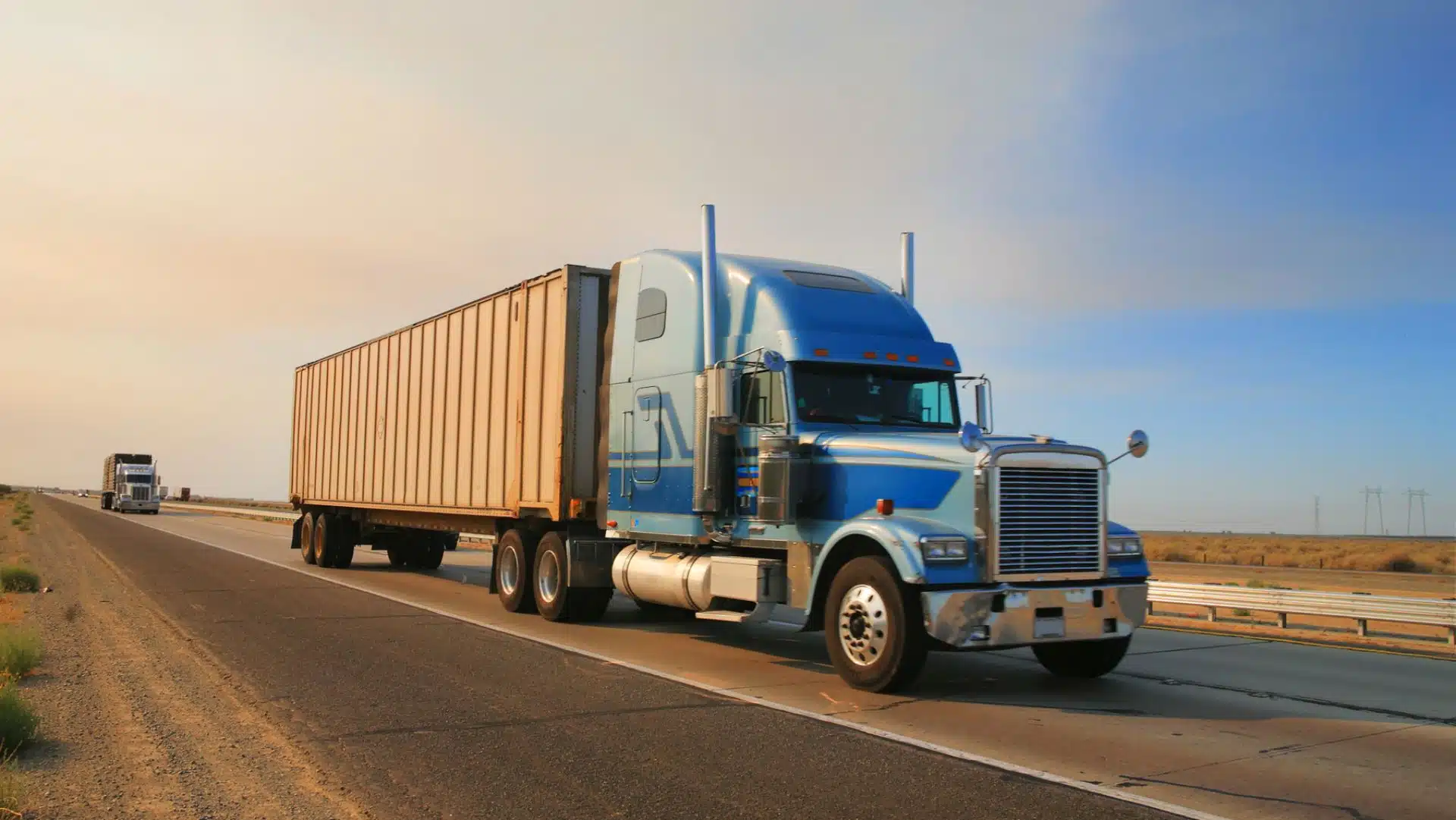
Blind spot truck accidents happen when a commercial truck driver fails to see a smaller vehicle in one of the truck’s large ‘no-zones’ and a crash occurs. These collisions are often severe because of the size and weight difference between trucks and passenger vehicles.
What Is a Blind Spot Truck Accident?
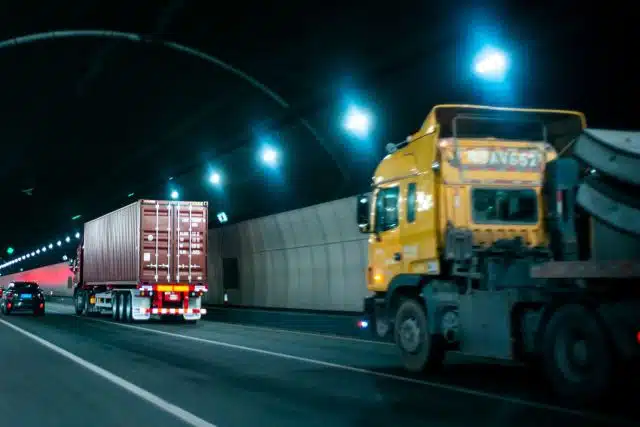
A blind spot truck accident is a collision caused by limited visibility around a large commercial vehicle. Every vehicle has blind spots. However, tractor-trailers and other commercial trucks have much larger blind zones than passenger cars.
These blind zones are areas where the truck driver cannot see other vehicles using mirrors or direct sight. When another vehicle travels inside one of these areas, it may disappear from the driver’s view.
If the driver changes lanes or turns without realizing another vehicle is present, a truck accident can occur. Trucks can weigh up to 80,000 pounds when fully loaded, so even a low-speed impact may cause serious injury.
Blind spot accidents most often occur during:
- Lane changes on highways
- Wide right turns at intersections
- Highway merges
- Backing maneuvers
- Traffic congestion transitions
These accidents are sometimes referred to as ‘no-zone collisions.’ The term emphasizes that these areas are dangerous spaces where visibility is limited.
Why Do Large Trucks Have Larger Blind Spots?
The design of commercial trucks creates natural visibility limitations. These limitations are not optional. They are built into the structure of the vehicle.
Size and Length of the Trailer
A standard tractor-trailer is long and wide. The trailer blocks the driver’s direct rear view. Unlike a car, a truck does not have a rear window that allows clear sight behind the vehicle.
This is why drivers must rely on side mirrors.
Mirror Limitations
Commercial trucks use large side mirrors and convex mirrors. These mirrors expand the field of vision. However, they cannot eliminate blind zones completely.
There are always areas that fall outside the mirror angle. Vehicles that enter those areas may not be visible.
Height of the Cab
Truck drivers sit high above the road. This creates a forward blind zone directly in front of the truck’s bumper. Smaller vehicles that drive too close may disappear from view.
Turning Mechanics
When a truck turns, especially a wide right turn, the trailer pivots. This pivot can block visibility along the side of the vehicle. A car that was visible moments earlier may move into a blind spot during the turn.
These design factors mean truck drivers must use extra caution when maneuvering.
Where Are a Truck’s Main Blind Spots?
Big trucks have areas around them where the driver cannot see other cars. These areas are called blind spots. Knowing where they are helps us understand how crashes happen.
Here are the main blind spots:
Right Side: The biggest blind spot is on the right side of the truck. It can cover several lanes and run along the whole trailer. If a car drives next to the trailer, the truck driver may not see it.
Left Side: There is also a blind spot on the left side. It is smaller than the right side. A car driving just behind the driver’s door may be hard to see.
Behind the Truck: There is a large blind spot right behind the trailer. Trucks do not have a rear window, so the driver cannot see cars directly behind them.
In Front of the Truck: There is also a blind spot in front of the truck. If a small car drives very close to the front bumper, the truck driver may not see it.
Because of these blind spots, both truck drivers and car drivers must be careful.
How Do Blind Spot Truck Accidents Happen?
Most blind spot accidents happen because the driver cannot see well, and someone makes a mistake.
Here are common ways these crashes happen:
- Unsafe Lane Changes: A truck may move into another lane without seeing a car in its blind spot. This can cause the car to be hit or pushed off the road.
- Wide Right Turns: Trucks need extra space to turn right. If a car tries to pass on the right side, it can get stuck between the truck and the curb.
- Merging on Highways: When a truck joins a highway, it may not see cars in its blind spots. This can lead to crashes, sometimes involving many cars.
- Backing Up: Trucks cannot see well behind them. When backing into a space or loading dock, they might hit something or someone.
- Tired or Distracted Driving: Truck drivers work long hours. If they are tired or not paying attention, they may forget to check their mirrors carefully.
Most of the time, these accidents are not done on purpose. They happen because drivers do not adjust for the truck’s large blind spots.
What Laws Apply to Blind Spot Truck Accidents?
Blind spot truck accidents are governed by a combination of state negligence principles and federal safety regulations that apply specifically to commercial vehicles.
Federal Motor Carrier Safety Administration (FMCSA) Rules
At the federal level, the Federal Motor Carrier Safety Administration (FMCSA) sets nationwide standards for commercial trucking operations. These regulations address driver training and licensing requirements, mirror and equipment standards, hours-of-service limits to prevent fatigue, safe lane change procedures, and mandatory vehicle inspection and maintenance protocols.
When a trucking company or driver violates an FMCSA rule, that violation can serve as powerful evidence in a civil injury claim, particularly if the breach directly contributed to the collision.
State Traffic and Negligence Law
State law also plays a central role. Under negligence principles, an injured person must prove four elements: the truck driver owed a duty of care, the driver breached that duty, the breach caused the crash, and the crash resulted in damages.
In blind spot cases, the core issue is whether the driver acted reasonably under the circumstances, such as checking mirrors, signaling appropriately, and ensuring the adjacent lane was clear before moving.
Who Is Responsible in a Blind Spot Truck Accident?
Responsibility in these cases may extend beyond the driver alone.
Drivers & Truck Companies
If a driver failed to check mirrors, improperly changed lanes, or ignored surrounding traffic, they may be individually liable.
However, trucking companies are often responsible as well under the doctrine of vicarious liability, meaning employers are accountable for the actions of drivers operating within the scope of employment.
Companies may also face direct liability for inadequate training, poor maintenance practices, hiring unqualified drivers, or encouraging unsafe delivery schedules that increase risk
Equipment or Vehicle Manufacturers
In some situations, equipment or vehicle manufacturers may share responsibility. Defective mirrors, malfunctioning braking systems, or faulty safety technology can contribute to blind spot crashes.
Additionally, third parties, such as maintenance contractors or shipping companies, may bear partial liability if their actions played a role in creating unsafe conditions.
How Is Fault Determined?
Determining fault requires a thorough investigation. Police reports often provide initial documentation of statements, vehicle positioning, and officer observations. Electronic Logging Device (ELD) data may reveal driving hours and operational details, helping identify fatigue or regulatory violations.
Dash camera footage can show lane changes, signals, and traffic flow in real time. Maintenance records may uncover unresolved mechanical issues, while witness statements can clarify how the collision occurred.
In complex cases, accident reconstruction experts analyze speed, angles, and roadway conditions to form a detailed picture of what happened.
Common Injuries in Blind Spot Truck Collisions
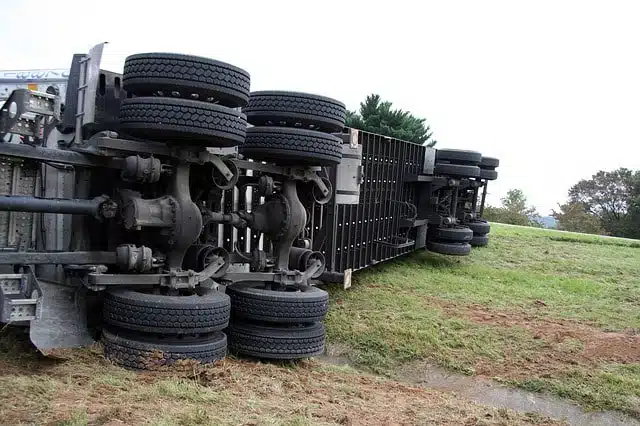
The injuries resulting from blind spot truck collisions are frequently severe due to the size and weight difference between commercial trucks and passenger vehicles.
Common injuries include:
- Traumatic brain injuries
- Spinal cord injuries
- Broken bones
- Internal organ damage
- Severe lacerations
- Burns
- Neck and back injuries
Recovery may require long-term medical treatment and rehabilitation.
What Compensation May Be Available?
If liability is established, compensation may include economic and non-economic damages.
Economic Damages
When liability is established, injured individuals may pursue compensation for both economic and non-economic damages. Economic damages typically cover measurable financial losses, such as:
- Medical bills
- Hospital stays
- Physical therapy costs
- Lost wages
- Diminished earning capacity
- Property damage.
Non-Economic Damages
Non-economic damages address the human impact of the injury, including pain and suffering, emotional distress, loss of enjoyment of life, and permanent disability.
In fatal accidents, surviving family members may be entitled to pursue wrongful death damages, which can include funeral expenses, loss of financial support, and loss of companionship.
The amount of compensation available depends on the severity of the injuries and the laws of the state where the claim is filed.
How Blind Spot Truck Accidents Differ From Car Accidents
Blind spot truck accident cases tend to be more complex than standard car accident claims. Commercial trucks are subject to federal regulations, higher insurance coverage requirements, and detailed safety standards. These cases often involve multiple potentially liable parties, including drivers, trucking companies, maintenance contractors, and manufacturers.
The evidence can also be more technical, involving electronic logging data, vehicle inspection records, and specialized accident reconstruction analysis. While commercial carriers typically maintain higher insurance policy limits than private drivers, disputes over liability and regulatory compliance can make these cases more complicated.
Safety Tips for Drivers Around Large Trucks
Drivers can take certain precautions to reduce their risk when sharing the road with large trucks. Avoid lingering alongside a truck, especially near the trailer’s rear wheels. Pass trucks quickly and safely, maintain a safe following distance, and never assume the driver can see your vehicle.
After passing, avoid cutting directly in front of a truck, as large vehicles require more distance to stop. While these steps cannot eliminate all risk, they can help reduce exposure to blind zones.
Blind spot truck accidents occur because large commercial vehicles have significant visibility limitations. When drivers fail to properly check mirrors or account for these blind zones, serious collisions may result.
These cases often involve federal safety regulations, complex liability issues, and significant injuries. Determining responsibility typically requires careful review of evidence and applicable law.
If you have questions about a blind spot truck accident or want to better understand your legal options, speak with a qualified attorney such as Sabbeth Law to handle commercial vehicle cases..
Client Testimonials
“Immediately after my son’s injury at work, he was treated poorly. Over the course of the next few days it became even worse, so I called Mike and he and Crystal have been absolute lifesavers during the process. Mike is not your typical stuffed suit lawyer who only cares about the bottom line he genuinely cares about his clients and his assistant Crystal is beyond amazing! My thanks to you both!”
LUKE PARMENTER
“I could never ask for a better attorney, to fight for me, to believe in me, and have faith in me, than what I found in Mike Sabbeth, He doesn’t treat you like a client, he treats you as if you are one of his own family members, He will fight for you, with all he has, and is ALWAYS up front and honest with you about everything!”
SANDRA DRUGE