
Pedestrian-Car Collisions in Parking Lots







Understanding Liability in Vermont and New Hampshire
Parking lot pedestrian accidents happen more often than most people think. They take place at grocery stores, shopping centers, hospitals, schools, apartment buildings, and office parks across Vermont and New Hampshire.
Even though cars move slower in parking lots than on highways, people walking have no protection. When a vehicle hits a pedestrian, serious injuries can happen.
What Determines Liability in a Parking Lot Pedestrian Accident?
Liability means legal responsibility. After a pedestrian-car crash in a parking lot, the law asks: who failed to act with reasonable care?
Both drivers and pedestrians must be careful. If someone does not act safely and that causes injury, that person may be legally responsible.
Most of the time, the driver is at fault. Drivers must stay alert. They must drive slowly. They must check carefully before backing up. If a driver reverses without looking and hits someone walking behind the car, that is usually considered negligence.
However, pedestrians also have duties. A person walking in a parking lot should stay aware. They should not suddenly step into the path of a moving car. They should try to use marked walkways when available.
The law does not automatically say one side is right. Instead, it looks at what everyone was doing at the moment of the crash.
Vermont and New Hampshire follow comparative negligence rules. This means both people can share fault. If a pedestrian is partly responsible, their payment may be reduced by their percentage of fault.
For example, if the pedestrian is found 20 percent responsible and the driver 80 percent responsible, the total amount of money awarded would be reduced by 20 percent.
How Do Parking Lot Pedestrian Accidents Usually Happen?
Parking lots may look simple, but they can be confusing. Cars move in many directions. Drivers look for empty spaces. Pedestrians walk between parked cars. Large vehicles can block views.
One common accident happens when a driver backs out of a parking space without checking carefully. A pedestrian walking down the lane may not be seen until it is too late. Even at low speeds, the impact can knock someone down and cause broken bones or head injuries.
Another common crash happens near entrances and exits. Drivers focus on cars coming from the street. They may not notice a pedestrian crossing in front of them. These accidents can be more forceful because drivers may be speeding up as they leave the lot.
Speeding inside a parking lot can also cause crashes. Even if there is no posted speed limit, drivers must move at a safe speed. Most safe parking lot speeds are between 5 and 15 miles per hour. A driver going much faster in a busy lot may be acting carelessly.
What Duties Do Drivers, Pedestrians, and Property Owners Have?

Parking lots are usually private property. But that does not mean there are no rules. General safety laws still apply.
Drivers must control their vehicles. They must look for pedestrians. They must slow down when needed. They must yield in marked crosswalks. If it is dark, raining, or crowded, drivers must be even more careful.
Pedestrians must also act safely. They should pay attention. They should not walk while distracted by their phone. They should check for cars before crossing behind vehicles.
Property owners have responsibilities too. In Vermont and New Hampshire, parking lot owners must keep their property reasonably safe. This means they should fix broken pavement, maintain clear markings, and provide proper lighting.
If a parking lot is poorly lit at night and that makes it hard to see pedestrians, the owner may share responsibility. If crosswalk lines are faded and confusing, that can also matter. Each situation is studied carefully.
What Evidence Helps Prove Fault?
Evidence is very important after a parking lot accident. Courts and insurance companies look at proof to decide what happened.
Security cameras are often the strongest evidence. Many stores and businesses record video. Footage can show how fast the car was moving and where the pedestrian was standing. But video is often erased after a short time. That is why acting quickly matters.
Police reports also help. When officers come to the scene, they write down what they see. They may talk to witnesses. They record details about the vehicles and the location.
Witnesses can give helpful information. Someone who saw the crash may say whether the driver was speeding or whether the pedestrian was visible. Memories fade over time, so getting contact information early is important.
Photos also help prove fault. Pictures of the scene can show lighting, weather, damage to the car, and the layout of the parking lot. Even the position of parked cars can explain why someone was not visible.
How Are Parking Lot Cases Different From Road Accidents?
Parking lot crashes are not exactly the same as road crashes.
On public roads, traffic laws clearly apply. Speed limits and right-of-way rules are written in state laws. In parking lots, those rules may not apply in the same way because the property is private. Instead, courts look at general safety rules.
Another difference is the property owner. On a public road, only drivers are usually involved. In a parking lot, the owner of the property may also be responsible if unsafe conditions played a role.
Insurance can also be more complex. The driver’s car insurance usually applies. But the property owner’s insurance may also provide coverage. If the driver has little or no insurance, other policies may be involved. This can make the case more complicated.
What Injuries Can Happen in These Collisions?
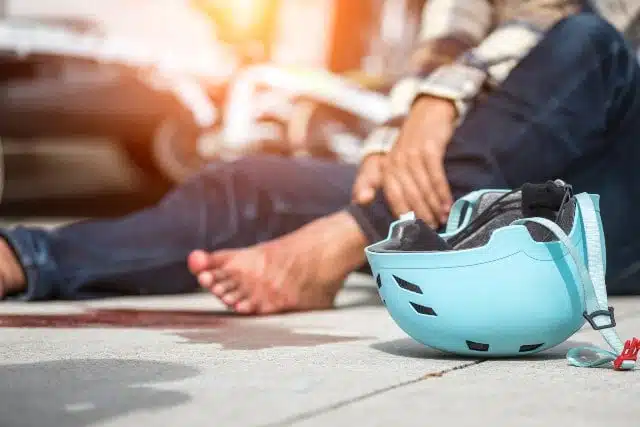
Even slow crashes can cause serious harm. A person walking has no protection from a vehicle.
Broken bones are common. Arms, legs, and wrists are often injured when someone falls to the ground. Head injuries can happen if the person hits the pavement. Concussions may cause headaches and confusion.
Back and spine injuries can cause long-lasting pain. Soft tissue injuries like muscle strains may not show up right away. Symptoms can appear hours or even days later.
Internal injuries can also occur. These may not be obvious at first, but can be dangerous. Emotional harm is also possible. Some people feel nervous or afraid to walk in parking lots again.
Seeing a doctor quickly is very important. Medical records help prove that the injuries were caused by the accident.
What Compensation May Be Available?
If someone else caused the accident, you may be able to receive money for your losses. This may include payment for medical bills and lost wages if you were unable to work.
If the injury causes long-term problems, future medical care may also be covered. Pain and suffering may also be considered. This refers to physical pain and emotional distress caused by the injury.
Each case is different. The amount depends on medical records, proof of lost income, and how much fault each person shares.
Because Vermont and New Hampshire use comparative fault rules, any shared blame can lower the total amount received.
What Should You Do After a Parking Lot Pedestrian Accident?
The steps you take after the crash can affect your case.
If you are able, stay at the scene. Exchange names and insurance information with the driver. Call the police so a report is made.
Take pictures of the scene. Photograph the car, the area, and any visible injuries. Get names and phone numbers from witnesses.
Seek medical care as soon as possible. Even if you feel fine, some injuries take time to appear.
Keep copies of all medical records and bills. Write down the days missed from work. Do not post details about the accident online. Insurance companies may look at social media.
Why Acting Quickly Matters

There are time limits for filing injury claims. In Vermont and New Hampshire, most personal injury cases must be filed within three years of the accident. Waiting too long can prevent recovery.
Evidence can disappear. Security video may be erased. Cars may be repaired. Witnesses may move away or forget details.
Taking early action helps protect important proof.
How Comparative Fault Affects Recovery
Comparative fault means that both sides can share blame. Insurance companies may argue that the pedestrian was distracted or did not look before crossing.
The percentage of fault matters. If total damages are $100,000 and the pedestrian is found 30 percent responsible, the payment may be reduced to $70,000.
Because insurance companies may try to reduce their payout, strong documentation and clear evidence are important.
When Property Owners May Be Responsible
Property owners must keep their parking lots reasonably safe. If lighting is poor, signs are missing, or dangerous conditions are not fixed, the owner may share blame.
If other accidents happened in the same place before and the owner did nothing, that can strengthen a claim.
Looking at maintenance records and design plans can show whether the owner knew about problems but failed to fix them. This is premises liability, and getting an attorney can help solve this.
Why These Cases Can Be Complicated
Parking lot pedestrian cases can involve several parties and insurance policies. Figuring out who is responsible may require reviewing video, medical records, and witness statements.
Insurance companies sometimes offer quick settlements. These offers may not fully cover future medical needs. Accepting money too soon may prevent further recovery if problems develop later.
Understanding how comparative fault, property liability, and insurance rules work together can be difficult without help.
Your Options After a Parking Lot Collision
Pedestrian-car collisions in parking lots across Vermont and New Hampshire can cause serious physical, emotional, and financial harm. Determining responsibility means studying what the driver did, what the pedestrian did, and whether the property was safe.
Learning how the law works and what evidence matters can help you protect your rights. Speaking with a local attorney from Sabbeth Law may help you understand your legal rights, preserve important evidence, and review your options before agreeing to any insurance settlement.
Every case is different. Taking time to understand your situation can help you move forward with greater confidence and clarity.alified attorney such as Sabbeth Law to handle commercial vehicle cases..
Client Testimonials
“Immediately after my son’s injury at work, he was treated poorly. Over the course of the next few days it became even worse, so I called Mike and he and Crystal have been absolute lifesavers during the process. Mike is not your typical stuffed suit lawyer who only cares about the bottom line he genuinely cares about his clients and his assistant Crystal is beyond amazing! My thanks to you both!”
LUKE PARMENTER
“I could never ask for a better attorney, to fight for me, to believe in me, and have faith in me, than what I found in Mike Sabbeth, He doesn’t treat you like a client, he treats you as if you are one of his own family members, He will fight for you, with all he has, and is ALWAYS up front and honest with you about everything!”
SANDRA DRUGE